|
 현재위치 : 홈 >> war에 대한 검색 결과
(66) 현재위치 : 홈 >> war에 대한 검색 결과
(66) |
| No. |
자료사진 |
제목 / 발행년도 |
저자 |
사용언어 |
출판사 |
출판구분 |
가격 |
|
|
| 62877 |
| |
한국의 역사.영문판. The History of Korea(제2권) 1905년 서울발행
/1905
하드커버 .2권 1질중 제 2권임.hard cover, 1905 first and only edition. Illustrated with numerous photographs. Volume 1: 409 pages. Volume 2:374 pages and Index. Based almost wholly on Korean sources,this history covers the period from legandary time,third millenium B.C. to Russo-Japanese War,1905. Because the author has not made much use of western language materials the modern period of Korean history ,especially as regards foreign relations ,is not brought out,as well as the early periods. A chart gives the lsit of Korean Kings,with English and Chinese characters. (Annotation is based on KOREA ,Library of Congress,1950)
|
Homer B.Hulbert |
영어 |
The Methodist Publishing House,Seoul |
초판 |
2,500,000 원
[품절]
|
|
|
|
| 61997-1 |
| |
독도자료 2권1질.삼국통람도설 (본책 1권 지도책1권:컬러지도 5장 도판 2장) 1832년 프랑스발행 三國通覽圖設 SAN KOKF TSOU RAN TO SETS ou apercu general des TROIS ROYAUMES.
/1832
.2권1질.본책 1권 지도책1권:컬러지도 5장과 한글자모도판 1장 포함 도판 2장) 1832년 프랑스발행 三國通覽圖設 SAN KOKF TSOU RAN TO SETS ou apercu general des TROIS ROYAUMES...............5장의 지도 명칭과 크기: 1. Carte des TROIS ROYAUMES(74 x 53 cm) 2. Carte des HUIT PROVINCES DU TCHAO SIAN (74 x 53 cm) 3. Carte de L'ILE DE IESO (94 x 53 cm) 4. Carte des ILES RIOUKIOU(74 x 53 cm) 5. Carte des ILES INHABITÉES OU MOU NIN SIMA appellées aussi O GASSA WARA SIMA 66 x 32 cm). (조선-북해도- 유구소개서)Oriental Translation Fund, London, 1832. contemporary backed Buckram. Book Condition: Good. First Edition. 4to - over 9¾" - 12" tall. Volume I: Text: 8 vo. vi, [1], 288 pp. / Volume II: 4to. Plates & Maps, 5 colour folding maps + 2 plates, subscribers leaf for the Athenaeum bound before title, translated from original Japanes-Chinese, gilt, small library stamp verso title page, slightly rubbed with some wear, small loss to spine of volume이책은 일본의 실학자였던 林子平이1785년 일본어로 출판했던 삼국통람도설을 독일인 동양학자였던 KLAPROTH 가 1832년 파리에서 프랑스어로 출판한 초판으로 당시 일본과 인접에 있던 朝鮮,北海島,琉球의 지명과 언어에 대한 연구서임. 저자 임자평은 독도를 조선의 영토로 인정하고 그에 대한 지도를 이 책자에서 발표한바 있음. 이 책자에서 조선을 맨처음 다루고 있으며 전체 288쪽 가운데 조선편은 처음부처 168쪽 까지이며 조선의 중요한 수백개의 지명을 설명하고 있으며 당시 조선에서 사용되었던 조선語를 124쪽부터 144쪽까지 많은 지면을 할애하여 약 500여 단어를 다루고 있음. 조선의 지리와 언어연구에 필수적인 극히 희귀한 자료임.............2010년 6월 18일 현재 인터넷으로 연결되는 전세계고서점유일본이며 국제시세는 10,000달러 정도임.Paris Printed for the Oriental Translation Fund of Great Britain and Ireland. 1832, 1832. Illustrated Survey of the Three Kingdoms Complete with Five Folding, Hand-Colored Maps KLAPROTH, Julius von, [translator]. San kokf tsou ran to sets, ou apercu general des trois royaumes . ouvrage accompagne de cinq cartes. Paris: Printed for the Oriental Translation Fund of Great Britain and Ireland, 1832. First Western edition. Octavo (9 3/4 x 6 1/4 inches; 248 x 158 mm.). [2], vi, [2], 288 pp. With a large quarto album (12 9/16 x 9 3/4 inches; 320 x 248 mm.) complete with a printed title-page and seven engraved plates, five of which are hand-colored folding maps. Contemporary quarter brown morocco over marbled papers, spine stamped and lettered in gilt in compartments, top edges gilt. Album with marbled endpapers, octavo with uncut fore-edge. Corners bumped on both; light browning to octavo. Minor splits along folds of some of the maps. Overall a very good copy with clean, bright maps. First written in Japanese and rendered in Chinese characters in 1785, this is the first Western edition of Rinsifee's San kokf tsou ran to set, or "Illustrated Survey of Three Kingdoms," edited and translated into French by German Orientalist Julius von Klaproth. Although certainly an able interpretation and impressive work of scholarship, this edition is most extraordinary for its large quarto album, which includes five magnificent hand-colored, engraved maps: "Carte de Iles Inhabites ou Mou Nin Sima"; "Carte de L'Ile de Ieso"; "Carte des Trois Royaumes"; "Carte des Iles Riou Kiou"; and "Carte des Huit Provinces du Tchao Sian." All of the maps are folding; the largest folds out to 21 1/4 x 28 1/2 inches, or 540 x 725 mm. Published in Edo, Japan at the end of the eighteenth-century, San kokf tsou ran to sets was written by Hayashi Shihei (1738-1793), a Japanese military stragetist, explorer, and writer also known as Rinsifee. In this book, Rinisfee recounts an exploratory survey of the geography of the regions that were then the frontiers of Japan, including Korea, Hokkaido, and the Ryukyu Islands, and provides descriptions of the inhabitants, including the Ainu. Anticipating European infiltration of Japan, in later works Rinisfee would advocate for improved defenses along Japanese frontiers and a stronger maritime presence. German Orientalist and explorer Julius von Klaproth (1783-1835) published several dozen translations during his lifetime but is probably best known for his 1823 work Asia polyglotta nebst Sprachatlas, one of the first linguistic surveys of Oriental languages. Cordier 2946.
|
Hayashi, Shihei(林子平,日本人1738-1793 ) KLAPROTH, Heinrich J. translator(German Orientalist1783-1835) ) 번역 |
불어 |
Printed for the Oriental Translation Fund of Great Britain and Ireland,Paris |
초판 |
13,500,000 원
[품절]
|
|
|
|
| 62003 |
| |
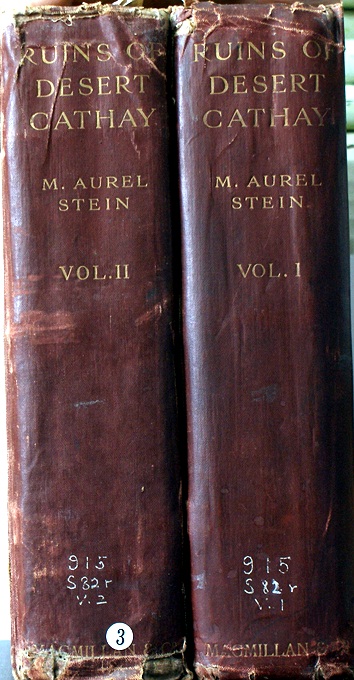
Ruins of Desert Cathay (2권1질) 1912년 런던초판.
/1912
제1권:546쪽. 제2권:517쪽.세계적 탐험가인 Aurel Stein의 중앙아시아 및 중국서부탐험기록으로 수백장의 희귀사진을 곁들이고 있음.세계적인 名著임...............................London Macmillan 1912, 1912. 2 volumes. First edition. Scarce. With numerous illustrations, color plates, panoramas, and maps from original surveys. Thick, large 8vo, xxxviii, 546; xxi, 517, [2] ads. IMPORTANT FIRST EDITION. In 1900-1901 Stein excavated several ruined sites in the Taklamakan Desert around Khotan, publishing his experiences in SAND-BURIED RUINS OF KHOTAN. On this expedition,1906-08, he had the opportunity to return to his work there, extending his systematic explorations farther eastwards for nearly a thousand miles in a straight line, though covering almost ten thousand miles of marching distance. The expedition completed an extensive survey of the Kun-lun Range and explored a number of ruined sites in the desert far beyond the extant oases east of Khotan. It was on this expedition that Stein explored the western end of the Great Wall of China and discovered the Cave of the Thousand Buddhas. For his work on this second expedition Stein was awarded the Founder's Gold Medal by the Royal Geographic Society.
|
Aurel Stein |
영어 |
Macmillan and Co., Ltd.London |
초판 |
1,000,000 원
|
|
|
|
|
|
|
|
|
|
|
| 7246 |
| |
소현세자 [昭顯世子1612~1645]자료.기독교자료.1857년 뉴욕초판.2권1질Christianity in China, Tartary and Thibet in 2 vol.
/1857
1636년 병자호란 직후 청나라 장수에 의해 아우 봉림대군과 함께 청국으로 인질로 끌려간 소현세자는 청국에서 Father Schall(Missionary Apostolic in China) 을 만남으로서 한국인으로는 기독교인을 만나 기독교 교리를 접한 최초의 인물일 것이다. 이보다 먼저 기독교 교리를 접한 한국인으로는 홍길동전을 지은 허균이 있지만 허균은 교리만 접했을 뿐 기독교인을 직접만나지는 않았기 때문에 기독교인을 직접적으로 접한 최초의 인물은 소현세자일 것이다..(판매자 註)................이름 왕(炡 ). 인조의 장자, 효종의 형이며, 어머니는 한준겸의 딸 인열왕후(仁烈王后)이다. 1625년 세자로 책봉되었고, 부인은 강석기(姜碩期)의 딸인 민회빈강씨이고 보통 강빈(姜嬪)이라고 부른다. 1636년 병자호란이 일어나 삼전도에서 청나라에 항복한 이후, 아우 봉림대군과 함께 청나라에 인질로 끌려갔다.
이후 9년간 심양(瀋陽)의 심관(瀋館)에 머물면서 많은 고초를 겪었다. 동시에 조선과 청나라 사이에서 창구역할을 맡아 조선인 포로 도망자의 속환문제, 청나라의 조선에 대한 병력 ·군량 ·선박 요구, 각종 물화의 무역 요구 등 정치 ·경제적 현안을 맡아 처리하였다. 또 청나라 인사들이 벌인 대부분의 행사에 참여하고 청나라 황제의 사냥 등에도 동행하였다.
1640~1642년 인조의 병문안을 위해 잠시 귀국하였고, 1644년 청나라 제9왕 다리콘[多爾袞]의 원정군을 따라 베이징[北京]에 들어갔다. 베이징에서 독일인 선교사 샬 폰 벨[湯若望]을 만나 그로부터 서양 역법과 여러 가지 과학에 관련된 지식을 전수받고 천주교에 관해 소개받았다.
당시 베이징에서 명나라 멸망의 현실을 직접 목도했기 때문인지 그는 청나라의 현실을 인정하고 청나라와 조선의 관계를 원활히 하려고 애썼다. 이에 청나라의 경제적 요구를 들어주면서 환심을 얻었는데, 그들은 그를 ‘소군(少君)’으로 부르기도 하였다. 이 과정에서 심관으로 들어가는 조선 정부의 재정부담이 커졌고, 동시에 부왕 인조의 의구심을 사게 되었다. 인조는 청나라가 소현세자를 즉위시키고 자신을 몰아내려는 공작을 펴는 것으로 의심, 그를 감시하였다.
1645년 영구귀국하였으나 청나라에서의 행실을 문제삼아 인조의 냉대를 받았고 급기야는 병을 얻어 급사하였다. 일설에는 그가 독살되었다는 주장도 있는데, 당시 조야의 배청적(排淸的)인 분위기를 염두에 두면 가능성이 있다. 그가 죽은 뒤 인조는 왕권강화 차원에서 세손(世孫:소현세자의 장자)을 폐위하고 봉림대군을 세자로 책봉하였다. 이러한 전후과정에서 부인인 강빈 역시 죽음을 당하고, 세 아들은 유배되었다가 죽었다. 이후로 강빈의 옥사를 억울하게 여기고 소현세자를 추모하는 분위기가 있어, 19세기 말에는 그의 후손을 왕으로 추대하려 했다는 역모사건이 일어나기도 하였다.(이상 www.naver.com에서 인용)........................................hardcover,12mo. volume 1: 358 pages. volume 2: 348 pages. first edition. Korea section:Father Schall appears in the book on pages 265-308 volume 2. His meeting with the King of Korea(Crown prince Sohyun of Yi Dynasty captured by Chinese government etc is dealt with on pages 304-308 volume 2.Crown Prince Sohyun (1612~1645),First son of King Injo of Yi Dynasty was taken with his younger brother(Prince Bolim)as hostage by the Chinese generals shortly after the Sino-Korean War in 1636. Crown prince Sohyun met Father Schall during his stay in China and became first Korean who met Christian in the History of Christianity in Korea.
|
Huc, M. L'Abbe |
영어 |
D. & J. Sadlier, New York |
초판 |
700,000 원
|
|
|
|
| 17540 |
| |
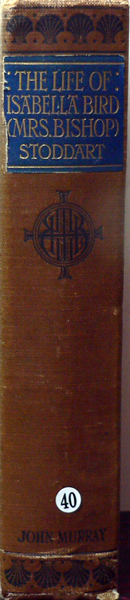
구한말 한국을 여행한 비숍여사일대기 Life of Isabella Bird(한국포함) 1908년 영국 제3판.Korea and her Neighbours (1898년 발행)의 저자.
/1908
구한말 한국을 여행한 비숍여사일대기 Life of Isabella Bird(한국포함) 1906년 영국초판.
하드커버 416쪽.사진자료 37장 포함....................... I.B.Bishop (1831-1904)은 영국왕립아세아학회 회원이며 여류작가로 1894년부터 1897년 까지 한국을 4차에 걸쳐 여행하고 한국에 관련된 서적 KOREA AND HER NEIGHBOURS(1897년 뉴욕발행) 등의 저서등으로 우리에게 친숙한 인물이다.그녀가 男裝을 하고 말(馬)을 이용하여 조선의 전역을 여행하고 저술한 것이 상기한 책이며 이 책을 통하여 구한말 조선의 문물과 정세등을 서구에 알린 통찰력이 뛰어난 여류작가.....................................hard cover, 8vo. 416 pages with 37 b/w illustrations......................................
Bird was born in Boroughbridge,in 1831 and grew up in Tattenhall, Cheshire.[1] As her father Edward was a Church of England priest, the family moved several times across Britain as he received different parish postings, most notably in 1848 when he was replaced as vicar of St. Thomas' when his parishioners objected to the style of his ministry.
Bird was a sickly child and spent her entire life struggling with various ailments. Much of her illness may have been psychogenic, for when she was doing exactly what she wanted she was almost never ill. Her real desire was to travel. In 1854, Bird's father gave her £100 and she went to visit relatives in America. She was allowed to stay until her money ran out. She detailed the journey anonymously in her first book The Englishwoman in America, published in 1856. The following year, she went to Canada and then toured Scotland, but time spent in Britain always seemed to make her ill and following her mother's death in 1868 she embarked on a series of excursions to avoid settling permanently with her sister Henrietta (Henny) on the Isle of Mull. Bird could not endure her sister's domestic lifestyle, preferring instead to support further travels through writing. Many of her works are compiled from letters she wrote home to her sister in Scotland.
Bird finally left Britain in 1872, going first to Australia, which she disliked, and then to Hawaii (known in Europe as the Sandwich Islands), her love for which prompted her second book (published three years later). While there she climbed Mauna Loa and visited Queen Emma.[1] She then moved on to Colorado, then the newest member of the United States, where she had heard the air was excellent for the infirm. Dressed practically and riding not sidesaddle but frontwards like a man (though she threatened to sue the Times for saying she dressed like one), she covered over 800 miles in the Rocky Mountains in 1873. Her letters to her sister, first printed in the magazine Leisure Hour,[1] comprised her third and perhaps most famous book, A Lady's Life in the Rocky Mountains.
Bird's time in the Rockies was enlivened especially by her acquaintance with Jim Nugent, a textbook outlaw with one eye and an affinity for violence and poetry. "A man any woman might love but no sane woman would marry", Bird declared in a section excised from her letters prior to their publication. Nugent also seemed captivated by the independently-minded Bird, but she ultimately left the Rockies and her "dear desperado". Nugent was shot dead less than a year later.
At home, Bird again found herself pursued, this time by John Bishop, an Edinburgh doctor in his thirties. Predictably ill, she went travelling again, this time to the far east: Japan, China, Vietnam, and Singapore. Yet when her sister died of typhoid in 1880, Isabella was heartbroken and finally accepted Bishop's marriage proposal. Her health took a severe turn for the worse but recovered by Bishop's own death in 1886. Feeling that her earlier travels had been hopelessly dilettante, Bird studied medicine and resolved to travel as a missionary. Despite her nearly sixty years of age, she set off for India.
Arriving on the subcontinent in February 1889, Bird visited missions in India, crossed Tibet, and then travelled in Persia, Kurdistan and Turkey. The following year she joined a group of British soldiers travelling between Baghdad and Tehran. She remained with the unit's commanding officer during his survey work in the region, armed with her revolver and a medicine chest supplied - in possibly an early example of corporate sponsorship - by Henry Wellcome's company in London.
Featured in journals and magazines for decades, Bird was by now something of a household name. In 1892, she became the first woman inducted into the Royal Geographical Society. Her final great journey took place in 1897 where she travelled up the Yangtze and Han rivers which are in China and Korea, respectively. Later still, she went to Morocco, where she travelled among the Berbers and had to use a ladder to mount her black stallion, a gift from the Sultan.[1] She died in Edinburgh within a few months of her return in 1904, just shy of her seventy-third birthday. She was still planning another trip to China.
"There never was anybody," wrote the Spectator, "who had adventures as well as Miss Bird." In 1982, Caryl Churchill used her as a character in her play Top Girls. Much of the dialogue written by Churchill comes from Bird's own writings.(from www.wikipedia.org)
|
A.M.Stoddart
|
영어 |
John Murray,London
|
기타 |
500,000 원
[품절]
|
|
|
|
| 17470 |

| |
구한말 한국을 여행한 비숍여사일대기 Life of Isabella Bird(한국포함) 1906년 영국초판.Korea and her Neighbours(1898년 발행) 의 저자./1906
하드커버 415쪽.사진자료 37장 포함.......................
I.B.Bishop (1831-1904)은 영국왕립아세아학회 회원이며 여류작가로 1894년부터 1897년 까지 한국을 4차에 걸쳐 여행하고 한국에 관련된 서적 KOREA AND HER NEIGHBOURS(1897년 뉴욕발행) 등의 저서등으로 우리에게 친숙한 인물이다.그녀가 男裝을 하고 말(馬)을 이용하여
조선의 전역을 여행하고 저술한 것이 상기한 책이며 이 책을 통하여 구한말 조선의 문물과
정세등을 서구에 알린 통찰력이 뛰어난 여류작가이였다...................hard cover, 8vo. 416 pages with 37 b/w illustrations
Bird was born in Boroughbridge,in 1831 and grew up in Tattenhall, Cheshire.[1] As her father Edward was a Church of England priest, the family moved several times across Britain as he received different parish postings, most notably in 1848 when he was replaced as vicar of St. Thomas' when his parishioners objected to the style of his ministry.
Bird was a sickly child and spent her entire life struggling with various ailments. Much of her illness may have been psychogenic, for when she was doing exactly what she wanted she was almost never ill. Her real desire was to travel. In 1854, Bird's father gave her £100 and she went to visit relatives in America. She was allowed to stay until her money ran out. She detailed the journey anonymously in her first book The Englishwoman in America, published in 1856. The following year, she went to Canada and then toured Scotland, but time spent in Britain always seemed to make her ill and following her mother's death in 1868 she embarked on a series of excursions to avoid settling permanently with her sister Henrietta (Henny) on the Isle of Mull. Bird could not endure her sister's domestic lifestyle, preferring instead to support further travels through writing. Many of her works are compiled from letters she wrote home to her sister in Scotland.
Bird finally left Britain in 1872, going first to Australia, which she disliked, and then to Hawaii (known in Europe as the Sandwich Islands), her love for which prompted her second book (published three years later). While there she climbed Mauna Loa and visited Queen Emma.[1] She then moved on to Colorado, then the newest member of the United States, where she had heard the air was excellent for the infirm. Dressed practically and riding not sidesaddle but frontwards like a man (though she threatened to sue the Times for saying she dressed like one), she covered over 800 miles in the Rocky Mountains in 1873. Her letters to her sister, first printed in the magazine Leisure Hour,[1] comprised her third and perhaps most famous book, A Lady's Life in the Rocky Mountains.
Bird's time in the Rockies was enlivened especially by her acquaintance with Jim Nugent, a textbook outlaw with one eye and an affinity for violence and poetry. "A man any woman might love but no sane woman would marry", Bird declared in a section excised from her letters prior to their publication. Nugent also seemed captivated by the independently-minded Bird, but she ultimately left the Rockies and her "dear desperado". Nugent was shot dead less than a year later.
At home, Bird again found herself pursued, this time by John Bishop, an Edinburgh doctor in his thirties. Predictably ill, she went travelling again, this time to the far east: Japan, China, Vietnam, and Singapore. Yet when her sister died of typhoid in 1880, Isabella was heartbroken and finally accepted Bishop's marriage proposal. Her health took a severe turn for the worse but recovered by Bishop's own death in 1886. Feeling that her earlier travels had been hopelessly dilettante, Bird studied medicine and resolved to travel as a missionary. Despite her nearly sixty years of age, she set off for India.
Arriving on the subcontinent in February 1889, Bird visited missions in India, crossed Tibet, and then travelled in Persia, Kurdistan and Turkey. The following year she joined a group of British soldiers travelling between Baghdad and Tehran. She remained with the unit's commanding officer during his survey work in the region, armed with her revolver and a medicine chest supplied - in possibly an early example of corporate sponsorship - by Henry Wellcome's company in London.
Featured in journals and magazines for decades, Bird was by now something of a household name. In 1892, she became the first woman inducted into the Royal Geographical Society. Her final great journey took place in 1897 where she travelled up the Yangtze and Han rivers which are in China and Korea, respectively. Later still, she went to Morocco, where she travelled among the Berbers and had to use a ladder to mount her black stallion, a gift from the Sultan.[1] She died in Edinburgh within a few months of her return in 1904, just shy of her seventy-third birthday. She was still planning another trip to China.
"There never was anybody," wrote the Spectator, "who had adventures as well as Miss Bird." In 1982, Caryl Churchill used her as a character in her play Top Girls. Much of the dialogue written by Churchill comes from Bird's own writings.(from www.wikipedia.org)
|
A.M.Stoddart |
영어 |
John Murray,London |
초판 |
500,000 원
[품절]
|
|
|
|
|
|
|
|
| 16349 |
| |
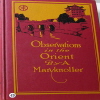
캐도록자료 Observations in the Orient, 1919년 뉴욕초판(사진 79장 포함)/1919
하드커버.323쪽.Maryknoll's first missioners left for China in 1918 to create missionaries, and evangelize the Eastern people. These logs are illustrated with 79 full page photographs of their experiences. A fascinating first hand account of early 20th Century missionary work, and how the men and women struggled to establish themselves in very remote parts of the Far East. Chapters include the missions departure from San Francisco; their sea voyage; Island Empire; Northward to Nikko and Sendai; Touring through the Dioceses; Korea; Manchuria to Tientsin; With the Lazarists in Peking and Chengtingfu; Franciscan Hospitality at Hankow; Up the Yangtze to Shanghai, etc. Maryknoll was established in 1911 as the Catholic Foreign Mission Society of America by the Bishops of the United States.Two diocesan priests, Fr. James Anthony Walsh of Boston and Fr. Thomas Frederick Price of North Carolina, were responsible for it's development of the commission to recruit, send and support U.S. missioners in areas around the world. On June 29, 1911, Pope Pius X blessed the founding of Maryknoll. Today there are over 550 Maryknoll priests and Brothers serving in countries around the world, principally in Africa, Asia and Latin America. |
james S. Walsh |
영어 |
Catholic Foreign Society of America |
초판 |
80,000 원
[품절]
|
|
|
|
|
|
|
|
|
|
|
|
|
|
|
|
|
|
|
|
|
|
|
|
| 2303 |

| |
1670년 발행 하멜표류기 불어초판.HAMEL, Hendrik. Relation du naufrage d''un vaisseau Holandois, sur la coste de l''Isle de Quelpaerts: avec la description du Royaume de Coree. Traduite du flamand, par Monsieur Minutoli(1670년 발행 하멜표류기 불어초판)
조선일보(2004년 1월 13일자 20면) 참고요함/1670
'하멜표류기' 1670년 불어 초판 국내 입수
17세기 조선의 사정을 담은 기행문 ‘하멜 표류기’의 1670년 프랑스어 초판< 사진 >이 국내에 입수됐다. 고서 상인 윤형원(尹亨源) 아트뱅크 대표는 최근 네덜란드 고서점으로부터 구입한 이 책을 12일 공개했다.
이 책은 1668년 ‘하멜 표류기’의 네덜란드 초판이 나온 지 2년 뒤 미뉘톨리(Minutoli)가 프랑스어로 번역한 것으로, 제목은 ‘제주도 해안에서의 네덜란드 배의 난파에 대한 보고서: 조선 왕국에 대한 묘사와 함께(Relation du Naufrage d’un Vaisseau Holandois, Sur la Coste de l’Isle de Quelpaerts: Avec la Description du Royaume de Cor eㆍ토마 졸리ㆍ168쪽)다. 그동안 국내에 입수된 ‘하멜 표류기’ 최고본(最古本)은 명지대 LG연암문고가 소장한 1672년 독일어 초판이었다.
Exceedingly rare book .The eyewitness Hendrik Hamel as the first European in Korea. Paris, Thomas Jolly, 1670. 12mo. Contemporary mottled calf, spine gilt in compartments, red sprinkled edges. (8), 165, (1, 2 blank) pp. First edition in French of an account of a stay of thirteen years in Korea by Hendrik Hamel, translated into French by Vincent Minutoli (ca. 1640 in Geneva -1710), a reformed minister in Holland and close friend of Pierre Bayle, who has translated also other Dutch travel accounts. There are also copies of his translation with the imprint ''Paris, L. Billaine, 1670'' with the name of the author on the title-page. In 1718 this translation was reprinted in Amsterdam in J.F. Bernard''s Recueil de voyages au Nord, vol. IV, p. 1-82 (and in the 1732 ed., vol. IV, p. 243-306, as well as in vol. VIII of Ant. F. Pr?ost d''Exiles''s Histoire g??al des voyages, p. 412-429.Hamel sailed as the ship''s secretary from Texel to Batavia on ''De Sperwer'' in January 1653. After visiting Batavia and Formosa, the ship set sail for Japan with the newly appointed V.O.C. governor for Korea, Cornelis Lessen, on board. Unfortunately the ship wrecked at the coast of an unknown island near Korea, which they named the Isle of Quelparts. Many of the crew drowned. Those who survived, including Hamel, went ashore, where they were imprisoned by the Koreans and brought to the main land where they were held for no less than thirteen years. In 1666 Hamel and a few of his companions succeeded to escape and they managed to reach Japan. In 1668 they arrived back in the Netherlands. Still in the same year the account of his misadventures was published at Rotterdam by Joh. Stichter. Hamel''s account, which is the first Western eyewitness of Korea, became very popular, and was not only translated into French, but also, in 1732, into English with the title An account of the shipwreck of a Dutch vessel on the coast of the Isle of Quelpaert. Good copy of a rare popular book with ownership''s entry on the title: ''De Ressevel''. Pag?, Bibl. Jap. 316; Polak 4284; Chadenat 1617, 3766; Tiele 449 (issue printed by Billaine, not mentioning the present issue); Tiele, M?oire p. 271-5; Cordier, Japonica 404; Alt-Japan Kat. 626 (the 18th-cent. editions). First edition of this title in Dutch was published in 1668 in Netherlands. Hamel's account gave the West its first direct knowledge of Korea. In 1593, a Spanish Jeuit ,Father de Cespedes ,had accompanied the Japanese troops of Toyotomi Hideyoshi during their invasion of Korea. But in their annual letters to their superior in Europe ,the Jesuits of Japan just related the campaign without carrying to include information on the country and its inhabitants. Fr.de Guzman used these letters in his Historia(1601) adding generally confusing infomation on Korea of Chinese origin. The reason for this ignorance was the strict rules prohibiting foreigners to enter Korea and the European navigators,who were trading with Japan,avoided sailing near the penininsula. In 1627,a VOC ship ,the Ouderkerk,having gone near the coast,sent a canoe to fetch some fresh water and three sailors who were aboard were captured by the inhabitants.One of them,Jan Janse Weltervree,who had taken the name Pak Yon,was still alive when Hamel and his companions were stranded on Cheju (Quelpaert) Island in 1653. The VOC vessel Sperwer left Batavia on June 18th 1653 with sixty-four men on board .Hendrik hamel waa the ship's "Secretary" .In August the vessel was caught in a severe storm and twenty-eight of the crew perished. The survvors were interened and subsequently transferred to Seoul. It was at Quelpaert,while waiting for a long time for orders from the court concerning the fate,that Hamel and his companions met Jan Weltevree who acted as translator for them. It was from him they learnt that onece in Korea one could not escape.It was on in 1666,after thirteen years ,when the supervision had relaxed ,that Hamel and seven of his companions could get hold of boat and were carried towards the Japanese island of Kyusu by the winter monsoon.In nagasaki,the rescued sailors were questioned at length by the Japanese and by the Director of the Deshima factory,Their answers,taken down in the company register dated Septrember 14th,1666,match the account which Hamel started writing at once. The last image is The Chosun Ilbo,January 13,2004 ( one of the largest and leading daily newspaper in Korea) reporting this book. ***** A New Version of Hamel's Old Book by Yoo Seok-jae (karma@chosun.com) The first edition of the "Journal of Hamel" published in 1670 in French, has come to Korea. Yoon Hyoung-won, the CEO of an antiquarian bookseller Art Bank, disclosed the first French edition of the journal on Monday. Yoon said he recently purchased the book from a Dutch antiquarian bookseller. Hendrick Hamel was a Dutch explorer and the first Westerner to discover Korea. His journal on Korea is significant in that it was the first book to introduce Korea to the Western world. The edition is a translated version of the original Dutch edition of the Journal of Hamel in 1668. It was translated into French by Minutoly. The English title of the 168-page version is "Report of the Shipwreck of a Dutch Vessel On the Cost of Jeju Island: With the Description of the Kingdom of Coree by Thomas Jolly." Previously, the oldest version of the Journal of Hamel had been the first edition in German published in 1672, owned by Myungji University and the LG Yonam Foundation. ***************************************************************
|
Hamel Hendrik |
불어 |
Paris, Thomas Jolly |
|
0 원
[품절]
|
|
|
|
| 3097 |
| |
애국가에 대한 새로운 자료(조선일보 2005년 6월 23일자 23면 기사 참조)Korean Research Bulletin Volume 1 Number 1, 2 ,,Volume 2 Number 1-2( 1943-1944)/1943
창간호 포함 3권이며 새로운 애국가 자료포함하고 있슴.
안익태가 애국가의 작곡을 하게 된 이유,.(인테넷으로 연결되는 전 세계고서점중 유일본...2004년 9월20일 현재).....................................................................................................................[Los Angeles 1943, Korean Research Council. ] Paper wrappers, very good,8vo. 32p, ......................................................................................................................한글·영어 병기 애국가 악보
1943년 미 '한국인 연구회보'에 실려… 새로 발굴 .................................................................. (조선일보 2005년 6월 23일자 인용)
입력 : 2005.06.22 17:47 17' / 수정 : 2005.06.22 23:57 12'
미국에서 한글과 영어를 병기해 간행한 애국가 악보(1943년 9월)가 새로 발굴됐다. 현전하는 애국가 악보 중 1936년 6월 미국에서 발간된 애국가 악보 다음으로 오래됐다. 애국가 악보는 조선총독부 경무국이 ‘금지단행본’으로 지정한 까닭에 광복 전 악보는 모두 해외에서만 나왔다. 현재까지 전하는 애국가 악보는 모두 4개다.
근현대사료수집가 윤형원 아트뱅크 대표가 22일 공개한 이 악보는 로스앤젤레스에서 운영되던 한국인연구위원회(Korean Research Council)가 계간으로 간행한 ‘한국인연구회보(Korean Research Bulletin)’ 1943년 9월호 첫 페이지에 실려 있다. 애국가 가사를 4절까지 한글로 기록한 뒤, 애국가 1절 가사를 ‘Dong hai mool gwa Paik doo san i…’로 발음나는 대로 알파벳으로 적었다.
애국가는 안익태가 1935년 11월, 미국 필라델피아에서 작곡했다. 안익태는 미국에서 발행되던 한국어 주간신문 ‘신한민보’ 1936년 3월 26일자 기고에서 “1930년 미국 상항(샌프란시스코)에 처음 도착했을 때 가장 깊은 인상을 주었던 것은 그곳 예배당에서 제 일생에 처음 부른 대한국(大韓國) 애국가였다”며 “그러나 이 곡조는 스캇치의 술노래(올드 랭 사인)였다가 나중에 이별가로 불린 것인데, 이를 신성한 애국가 곡조로 부르는 것은 대한국의 수치인 줄 자각해 애국가 작곡을 결심했다”고 밝혔다. 그는 이 글에서 “애국가는 지난 5년 동안의 노력 끝에 1935년 11월 어느 날 이른 아침에 완성했으며, 샌프란시스코에 처음 도착했을 때 한인교회 목사님으로부터 받은 만년필로 작곡했다”고 밝혔다.
‘신한민보’는 애국가 작곡 경위를 밝힌 안 선생의 기고문을 실은 직후인 1936년 6월 18일자에 “이 악보를 받으신 분은 20전(이상)을 출판비조로 아끼지 않고 보내실 줄을 믿는다”는 광고와 함께 애국가 악보를 별지(別紙)로 신문에 동봉해 독자들에게 배포했다. 이 악보가 현재 남은 애국가 악보 중 가장 오래된 것이다.
Vol. 1 No. 1, Jan 1943, bib, Japan's Foreign Policy & Its Setting in the World Today, by Sae Woon Chang. The bulletin discusses various aspects of Korea and it's often changing position in the global theater. There are usually astute references to Japan & Japanese wars, the U.S. as well as things more intimately Korean; the Korean National Anthem, Korean folk songs, Korean geography & agriculture as well as political relations......................Los Angeles 1943, Korean Research Council]. White wrappers, very good, 32p., Vol. 1 No. 2 Sept. 1943. The bulletin discusses various aspects of Korea and it's often changing position in the global theater. There are usually astute references to Japan & Japanese wars, the U.S. as well as things more intimately Korean; the Korean National Anthem, Korean folk songs, Korean geography & agriculture as well as political relations............Los Angeles 1945, Korean Research Council]. White wrappers, very good, 29p., Vol. 2 No's 1 & 2, May 1945, 17 tables, bib-liog. Problems in Agriculture in Post-War Korea by K. S. Yum. The bulletin discusses various aspects of Korea and it's often changing position in the global theater. There are usually astute references to Japan & Japanese wars, the U.S. as well as things more intimately Korean; the Korean National Anthem, Korean folk songs, Korean geography & agriculture as well as political |
Korean Reaserch Council,L.A. |
영어 |
. |
초판 |
2,000,000 원
|
|
|
|
| 3097 |
| |
애국가에 대한 새로운 자료(조선일보 2005년 6월 23일자 23면 기사 참조)Korean Research Bulletin Volume 1 Number 1, 2 ,,Volume 2 Number 1-2( 1943-1944)/1943
창간호 포함 3권이며 새로운 애국가 자료포함하고 있슴.
안익태가 애국가의 작곡을 하게 된 이유,.(인테넷으로 연결되는 전 세계고서점중 유일본...2004년 9월20일 현재).....................................................................................................................[Los Angeles 1943, Korean Research Council. ] Paper wrappers, very good,8vo. 32p, ......................................................................................................................한글·영어 병기 애국가 악보
1943년 미 '한국인 연구회보'에 실려… 새로 발굴 .................................................................. (조선일보 2005년 6월 23일자 인용)
입력 : 2005.06.22 17:47 17' / 수정 : 2005.06.22 23:57 12'
미국에서 한글과 영어를 병기해 간행한 애국가 악보(1943년 9월)가 새로 발굴됐다. 현전하는 애국가 악보 중 1936년 6월 미국에서 발간된 애국가 악보 다음으로 오래됐다. 애국가 악보는 조선총독부 경무국이 ‘금지단행본’으로 지정한 까닭에 광복 전 악보는 모두 해외에서만 나왔다. 현재까지 전하는 애국가 악보는 모두 4개다.
근현대사료수집가 윤형원 아트뱅크 대표가 22일 공개한 이 악보는 로스앤젤레스에서 운영되던 한국인연구위원회(Korean Research Council)가 계간으로 간행한 ‘한국인연구회보(Korean Research Bulletin)’ 1943년 9월호 첫 페이지에 실려 있다. 애국가 가사를 4절까지 한글로 기록한 뒤, 애국가 1절 가사를 ‘Dong hai mool gwa Paik doo san i…’로 발음나는 대로 알파벳으로 적었다.
애국가는 안익태가 1935년 11월, 미국 필라델피아에서 작곡했다. 안익태는 미국에서 발행되던 한국어 주간신문 ‘신한민보’ 1936년 3월 26일자 기고에서 “1930년 미국 상항(샌프란시스코)에 처음 도착했을 때 가장 깊은 인상을 주었던 것은 그곳 예배당에서 제 일생에 처음 부른 대한국(大韓國) 애국가였다”며 “그러나 이 곡조는 스캇치의 술노래(올드 랭 사인)였다가 나중에 이별가로 불린 것인데, 이를 신성한 애국가 곡조로 부르는 것은 대한국의 수치인 줄 자각해 애국가 작곡을 결심했다”고 밝혔다. 그는 이 글에서 “애국가는 지난 5년 동안의 노력 끝에 1935년 11월 어느 날 이른 아침에 완성했으며, 샌프란시스코에 처음 도착했을 때 한인교회 목사님으로부터 받은 만년필로 작곡했다”고 밝혔다.
‘신한민보’는 애국가 작곡 경위를 밝힌 안 선생의 기고문을 실은 직후인 1936년 6월 18일자에 “이 악보를 받으신 분은 20전(이상)을 출판비조로 아끼지 않고 보내실 줄을 믿는다”는 광고와 함께 애국가 악보를 별지(別紙)로 신문에 동봉해 독자들에게 배포했다. 이 악보가 현재 남은 애국가 악보 중 가장 오래된 것이다.
Vol. 1 No. 1, Jan 1943, bib, Japan's Foreign Policy & Its Setting in the World Today, by Sae Woon Chang. The bulletin discusses various aspects of Korea and it's often changing position in the global theater. There are usually astute references to Japan & Japanese wars, the U.S. as well as things more intimately Korean; the Korean National Anthem, Korean folk songs, Korean geography & agriculture as well as political relations......................Los Angeles 1943, Korean Research Council]. White wrappers, very good, 32p., Vol. 1 No. 2 Sept. 1943. The bulletin discusses various aspects of Korea and it's often changing position in the global theater. There are usually astute references to Japan & Japanese wars, the U.S. as well as things more intimately Korean; the Korean National Anthem, Korean folk songs, Korean geography & agriculture as well as political relations............Los Angeles 1945, Korean Research Council]. White wrappers, very good, 29p., Vol. 2 No's 1 & 2, May 1945, 17 tables, bib-liog. Problems in Agriculture in Post-War Korea by K. S. Yum. The bulletin discusses various aspects of Korea and it's often changing position in the global theater. There are usually astute references to Japan & Japanese wars, the U.S. as well as things more intimately Korean; the Korean National Anthem, Korean folk songs, Korean geography & agriculture as well as political |
Korean Reaserch Council,L.A. |
영어 |
. |
초판 |
2,000,000 원
|
|
|
|
| 3104 |
| |
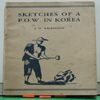
Sketches of a P.O.W. in KOREA(조선일보 2004.9.8일 보도참고요함).1945년 초판./1945
Paperback,octavo.30 pages. First and only edition. Extremely rare source on British Prisoners of War captured by Japanese amry in 1942 and lived in Korea up to the finish of War in August 1945.Collection of drawing and skecthes ,prepared under difficult conditions and with poor materials ,represents some of experiences as Prisons of War in Korea during World War Second. 2차 세계대전 중 일본군에 잡힌 영국과 호주 출신 연합군 전쟁포로 수백 명이 한반도에 설치된 연합군 포로수용소에서 강제 노동에 시달리는 모습을 담은 그림 자료가 공개됐다. ‘한국의 전쟁포로가 그린 스케치(SKETCHES OF A P.O.W IN KOREA)’라는 제목의 30쪽 분량인 소책자는 존 윌킨슨(John Wilkinson)이란 호주군 포로가 쓰고 그린 것. 연합군 포로들의 선상, 수용소 생활상, 당시 한국의 모습 등을 그림과 짧은 글로 소개하고 있다. 싱가포르에 수용되어있다 1942년 9월 22일 부산에 내린 그는 1945년 종전을 맞을 때까지 서울과 함흥의 연합군 포로수용소에 억류됐다. 책자는 고서점 ‘아트뱅크’의 윤형원(尹亨源) 대표가 최근 입수한 자료를 본지에 공개한 것이다. 윌킨슨은 “경성역(지금의 서울역) 노역은 몹시 힘들었지만, 식료품을 훔칠 수 있어 포로들이 좋아했다” “매점에 물건이 거의 없었으며, 겨울에 수용소 내부온도가 0도 가까이 떨어져 포로들이 한곳에 모여 체온을 유지해야 했다”고 적고 있다. ▲ 갓 쓰고 도포를 입은 당시 한국 중·상류층의 모습 그는 또 서울서 본 조선인의 삶도 소개하고 있다. 장례식 상여가 지나가는 모습은 “울긋불긋한 천이 화려해 마치 결혼식 같았다”고 했고, 갓 쓰고 두루마기로 정장을 한 한국 노인, 털모자 차림의 남자 등 한국인의 모습도 담았다. 새해를 맞아 일본식 찹쌀떡을 치는 모습도 그리고 있다. 포로수용소는 용산 부근에 있는 붉은 벽돌 4층 건물로, 이곳에 수용된 포로들은 공장부지 조성 작업 등 다양한 노역에 동원됐다. 윌킨슨은 “궤도차에 돌을 싣고 수백m를 왕복하는 일을 하루 최고 12회나 했으며, 작업 도중 2명이 사고로 죽었다”고 기록했다. 윌킨슨은 이 책을 “한국 땅에서 죽은 사람들, 특히 시드니 출신 헤이터 부대에 바친다”고 썼다. 이 책은 1945년 호주 멜버른의 윌크 출판사에서 간행됐다.
|
J.D.Wilkinson |
영어 |
Wilke and Co.Pty.Ltd.Melbourne |
초판 |
1,000,000 원
|
|
|
|
|
|
|
|
| 6388 |
| |
西洋에서 서양어로 번역된 최초의 韓國語本.LUI HO(流合) 1838년 네덜란드에서 독일어로 발행.초판./1838
LUI HO(流合) sive VOCABULARIUM SINENSE IN KORAIANUM CONVERSE ,Opus Sinicum origine in peninsula Korai impressum in Lapide Exaratum a Sinensi KO TSCHING DSCHANG et redditum curante PH.FR.de SIEBOLD........................................................................................................ 조선시대 우리나라 漢字학습서 ‘유합’ (조선일보.2006년 4월11일자 A23면 기사)
1838년 독일어 초판본 발견
“서구에서 최초로 번역된 한국 서적”
서구에 최초로 번역 소개된 한국 서적의 19세기 초 번역본이 발견됐다. 이 책은 독일인 지볼트(Philipp Franz von Siebold·1796~1866·왼쪽 사진)가 1838년 네덜란드 라이덴(Leiden)에서 출간한 ‘유합(類合·Lui H?)’의 초판본으로, 최근 고서점 아트뱅크(koreanamuseum.com)의 윤형원(尹亨源) 대표가 해외에서 입수해 10일 공개했다. 가로 29.5㎝, 세로 37.5㎝의 크기에 42쪽 분량인 이 책은 한자 입문서 ‘유합’의 전문(全文)을 기록하고 글자 양쪽에 뜻과 발음을 나타내는 한글을 함께 적은 뒤, 그 내용을 모두 독일어로 번역했다. 예를 들어 ‘東’에 ‘동녁 동’이라는 뜻과 음을 한글로 적고 뒤에서 ‘Tong(한국 한자 발음) Ost(독일어 뜻) tong nj?k(한국어 뜻)’을 기록했다. 부록으로는 어휘집과 시조, 한시 2편 등이 실렸다.
독일 출신의 의사인 지볼트는 네덜란드 동인도회사의 파견으로 1823년부터 1830년까지 일본 나가사키(長崎)에서 근무했고, 1828년 조선의 난파 선원들을 만난 것을 계기로 우리나라에 관심을 가지기 시작했다. 그가 1852년 출간한 ‘일본(Nippon)’의 제7부에 ‘유합’을 번역한 내용이 실렸지만 그 초판이 언제 출간됐는지는 확실하지 않았다. 1989년 지볼트에 대한 논문을 썼던 고영근(高永根) 서울대 명예교수는 “1838년의 초판본은 지금까지 확인된 적이 없었다”며 “이번에 발견된 책은 서구에서 가장 먼저 번역된 한국 서적이라는 의미가 있다”고 말했다. 이보다 3년 앞선 1835년 영국 선교사 메드허스트가 한국 서적 ‘왜어유해’ 등을 번역한 ‘조선위국자휘(朝鮮偉國字彙)’를 냈지만 유럽이 아닌 인도네시아에서 출간됐다.
조선 초기에 쓰인 ‘유합’은 1500여 자(字)를 담고 있으며, 조선시대 ‘천자문’과 쌍벽을 이룬 한자 학습서였다. 손희하(孫熙河) 전남대 국문과 교수는 “‘유합’은 중국에서 나온 ‘천자문’과는 달리 우리 고유 문화를 풍부하게 담고 있는 책”이라며, “지볼트의 번역본은 19세기 초의 남부 방언을 담고 있는 귀중한 자료로, 당시 서구인들이 이를 통해 한국의 언어와 문화를 접하고 학습했다는 것을 알 수 있다”고 말했다.
--------------------------------------------------------------------------------
hardcover, 29x38cm. 38 pages in Korean,Chinese,Japanese and German.First Korean book translated and published in western languages in Europe. Lew Hap (LUI HO)is a kind of Korean book dedicated to helping Korean Children to study the introduction and basic course of Chinese Characters from the early times in Chosen Dynasty .Extremely rare source on the linguistics of Korean Language......................................................Philipp Franz von Siebold: Philipp Franz Balthasar von Siebold (February 17, 1796 in Würzburg - October 18, 1866 in Munich) was a German physician. He emerged as the first European to teach Western medicine in Japan. He obtained significance for his study of Japanese flora and fauna that were endemic to the unique biotic island landscape...................................................... EARLY LIFE: Born in Würzburg, Bavaria into a family of doctors and professors of medicine, von Siebold initially studied medicine at the university of his hometown from November 1815. One of his professors was Franz Xaver Heller (1775-1840), author of the Flora Wirceburgensis (flora of the Grand Duchy of Würzburg, 1810-1811). Ignaz Döllinger (1770-1841), his professor of anatomy and physiology, however, most influenced him. Döllinger was one of the first professors to understand and treat medicine as a natural science. Von Siebold stayed at Dollinger's, where he came in regular contact with other scientists. He read the books of Alexander von Humboldt, a famous naturalist and explorer, which likely raised his desire for travels to far-away, distant lands. Philipp von Siebold became a Doctor by earning his M.D. in 1820. He initially practiced medicine in Heidingsfeld, Germany (now part of Würzburg). Invited to Holland by an acquaintance of the family, von Siebold applied for a position as a military doctor. This position would enable him to travel to the Dutch colonies. He entered Dutch military service on June 19, 1822. He was appointed ship's doctor on the frigate Adriana on the voyage from Rotterdam to Batavia (present-day Djakarta) in the Dutch East Indies (present-day Indonesia). On his trip to Batavia on the frigate Adriana, he practiced his knowledge of the Dutch language and rapidly learned Malay. During the long trip, von Siebold started a collection of sea fauna. He arrived in Batavia on February 18, 1823. As an army medical officer, von Siebold posted with an artillery unit. He stayed, however, a couple of weeks at the residence of the governor-general to recover from illness. With his erudition, he impressed the governor-general baron Van der Capellen and the head of the botanical garden Buitenzorg Caspar Georg Carl Reinwardt. Already, these men witnessed a second Engelbert Kaempfer and Carl Peter Thunberg (author of Flora Japonica), both former resident physicians at Deshima. The Batavian Academy of Arts and Science made von Siebold a member. In Japan................................................................................... Sent to Deshima Island Nagasaki in June 28, 1823, von Siebold arrived August 11, 1823 as the new resident physician and scientist to the island. During his eventful trip he barely escaped drowning during a typhoon in the East-Chinese Sea. Since only a very limited number of Dutch citizens were allowed on this island, the posts of physician and scientist had to be combined. At that time, Deshima was no longer in the possession of the Dutch East Indian Company but was kept running by the Dutch State, because of political reasons. Von Siebold invited Japanese scientists to show them the marvels of western science, learning in return through them much about the Japanese and their customs. After curing a local influential officer, von Siebold gained the ability to leave the trade post. He used this opportunity to treat Japanese patients in the greater area around the trade post. Since mixed marriages were forbidden, von Siebold "lived together" with his Japanese partner Kusomoto Taki (楠本滝). In 1827 Kusomoto Taki gave birth to their daughter, Oine. Later, Oine became the first Japanese "female doctor" and midwife. She died in 1903. Von Siebold used to call his wife "Otakusa" and named a Hydrangea after her. Von Siebold began a medical school with the 50 students, appointed by the Shogun (see Rangaku). They helped the botanical and naturalistic studies of von Siebold. His school, the Narutaki-juku, grew into a meeting place for around 50 Rangakusha. Recognized by the Japanese, von Siebold served as an expert on Western science. The Dutch language became the lingua franca (common spoken language) for these academic and scholarly contacts until the Meiji Restoration. His patients paid him in kind with a whole variety of objects and artifacts that would later gain historical significance. These everyday objects later became the basis of his large ethnographic collection, which consisted of everyday household goods, woodblock prints, tools and hand-crafted objects used by the Japanese people. His main interest, however, focused on the study of Japanese fauna and flora. He collected as much material as he could. Starting a small botanical garden behind his home (there was not much room on the small island) von Siebold amassed over 1,000 native plants. In a specially built glasshouse he cultivated the Japanese plants to endure the Dutch climate. Local Japanese artists drew images of these plants, creating botanical illustrations and images of the daily life in Japan, which complemented his ethnographic collection. He hired Japanese hunters to track rare animals and collect specimens. Many specimens were collected with the help of his Japanese collaborators Ito Keisuke (1803-1901), Mizutani Sugeroku (1779-1833), Ohkochi Zonshin (1796-1882) and Katsuragawa Hoken (1797-1844), a physician to the Shogun. As well, von Siebold's assistant and later successor, Heinrich Bürger (1806-1858), proved to be indispensable in carrying on von Siebold's work in Japan. Von Siebold first introduced to Europe such familiar garden-plants as the Hosta and the Hydrangea otaksa. Unknown to the Japanese, he was also able to smuggle out germinative seeds of tea plants to the botanical garden Buitenzorg in Batavia. Through this single act, he started the tea culture in Java, a Dutch colony at the time. Until then Japan had strictly guarded the trade in tea plants. Remarkably, in 1833, Java already could boast a half million tea plants. During his stay at Deshima, he sent three shipments with an unknown number of herbarium specimens to Leiden, Gent, Brussels and Antwerp. The shipment to Leiden contained the first specimens of the Japanese giant salamander (Andrias japonicus) to be sent to Europe. In 1825 the East Indian Company provided him with two assistants : apothecary and mineralogist Heinrich Bürger (his later successor) and the painter Carl Hubert de Villeneuve. Each would prove to be useful to von Siebold's efforts that ranged from ethnographical to botanical to horticultural, when attempting to document the exotic Eastern Japanese experience. Reportedly, von Siebold was not the easiest man to deal with; as he continuously conflicted with his Dutch superiors, who held against him his superior attitude. This thread of conflict resulted in his recall in July 1827 back to Batavia. But the ship, the Cornelis Houtman, sent to carry von Siebold back to Batavia, was thrown ashore by a typhoon in Nagasaki bay. The same storm badly damaged Dejima and destroyed von Siebold's botanical garden. Repaired, the Cornelis Houtman set afloat. It left for Batavia with 89 crates of von Siebold's salvaged botanical collection, but von Siebold, however, remained behind in Dejima. In 1828 von Siebold made the court journey to Edo. During this long trip he collected many plants and animals. But he also obtained from the court astronomer Takahashi Kageyasu several detailed maps of Japan and Korea (written by Ino Tadataka), an act strictly forbidden by the Japanese government. When the Japanese discovered, by accident, that von Siebold had mapped northern parts of Japan, the government accused him of high treason and of being a spy for Russia. The Japanese ordered von Siebold into house arrest and expelled him from Japan on October 22, 1829. Satisfied that his Japanese collaborators would continue his work, he journeyed back on the frigate Java to his former residence, Batavia, in possession of his enormous collection of thousands of animals and plants, his books and ... his maps. The botanical garden of Buitenzorg would soon house von Siebold's surviving, living flora collection of 2,000 plants. He arrived in the Netherlands on July 7, 1830. His stay in Japan and Batavia had lasted for a period of eight years. Return to Europe.............................................................................. Von Siebold arrived just at a time when, in 1830, political troubles erupted in Brussels, leading soon to the Belgian independence. Hastly he salvaged his ethnographic collections in Antwerp and his herbaria specimens in Brussels and brought them over to Leiden. Unfortunately, he left behind his botanical collections of living plants that were sent to the University of Gent. The consequent expansion of this collection of rare and exotic plants led to the horticultural fame of Gent. Nevertheless, the University of Gent presented him in 1841, in gratitude, specimens of every plant from his original collection. Von Siebold settled in Leiden, taking with him the major part of his collection. The "von Siebold collection," containing many species type specimens, was the earliest botanical collection from Japan. Even today, it still remains a subject of ongoing research, a testimony to the depth of work undertaken by von Siebold. It contained about 12,000 specimens, from which he could describe only about 2,300 species. The whole collection was purchased for a handsome amount by the Dutch government. As well, von Siebold was granted a generous annual allowance by the Dutch King Willem I. In 1842 the King even raised von Siebold to the peerage as an esquire. Title page of Flora JaponicaThe "von Siebold collection" opened to the public in 1831. He founded a museum in his home in 1837. His successor in Japan, the aforementioned Heinrich Bürger, sent him three more shipments of specimens. This flora collection formed the basis of the Japanese collections of the National Herbarium in Leiden and the Museum Naturalis. This museum later grew into the well-known and respected National Museum of Ethnology in Leiden. During his stay in Leiden, he authored Nippon in 1832, the first tome of a richly illustrated ethnographical and geographical work on Japan. It also contained a report of his journey to the Shogunate Court at Edo. Given the scale of von Siebold's other publications, he proved to be quite prodigious; as six more tomes would appear until 1882. More over, the Bibliotheca Japonica appeared between 1833 and 1841. This work was co-authored by Joseph Hoffmann and Kuo Cheng-Chang, a Javanese from Chinese extraction, who had journeyed along with von Siebold from Batavia. It contained a survey of Japanese literature and, in addition, a Chinese, Japanese and Korean dictionary. The zoologists Coenraad Temminck (1777-1858), Hermann Schlegel (1804-1884) and Wilhem de Haan (1801-1855) "scientifically" described and documented von Siebold's collection of Japanese animals. The result led to the Fauna Japonica, a series of monographs published between 1833 and 1850, making the Japanese fauna the best-described non-European fauna - a remarkable feat for von Siebold. Additionally von Siebold produced his Flora Japonica in collaboration with the German botanist Joseph Gerhard Zuccarini (1797-1848). It first appeared in 1835. The completed version, however, did not appear until after his death, finished in 1870 by F.A.W. Miquel (1811-1871), director of the Rijksherbarium in Leiden. This work established von Siebold's scientific fame, not only--and already--in Japan, but in Europe as well. From the Hortus Botanicus Leiden--the botanical gardens of Leiden--many of Siebold's plants started their conquest of Europe and from there to other countries. Hosta and hortensia, Azalea, and the Japanese butterbur and the coltsfoot as well as the Japanese larch were the conquest that, then, begun to inhabit gardens across the "world," which likely consisted of the Colonial Trans-Atlantic, where trade flourished both in the North and the South, the East and the West of the two opposing hemispheres--the "Old World" and "New World." Though he is well known in Japan ('Shiboruto-san'), mentioned in all schoolbooks, von Siebold is almost unknown to the Dutch or Germans, except among gardeners who admire many plants with the entitlement of the sieboldii and sieboldiana. The Hortus botanicus in Leiden has recently laid out the "von Siebold memorial garden", a Japanese garden with plants sent by von Siebold. Japanese visitors come and visit this garden, to pay their respect for him.
|
KO TSCHING DSCHANG(Kuo Cheng-Chang) / Philipp Franz von Siebold |
독어 |
Lugduni Batavorum, Leiden,Netherlands |
초판 |
20,000,000 원
[품절]
|
|
|
|
|
|
|
| 5746 |
| |
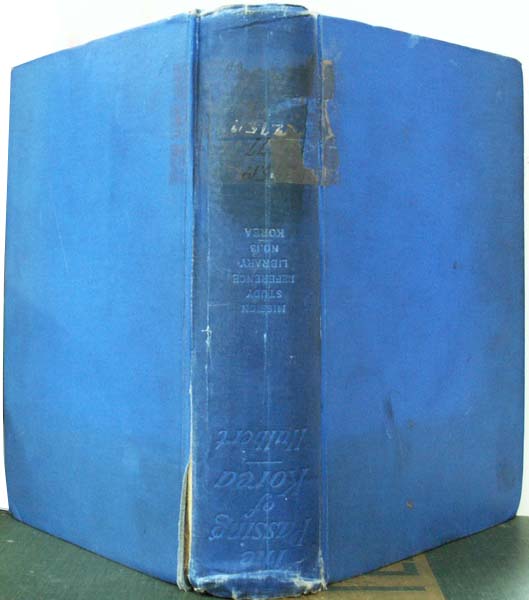
대형 흑백사진 54장이 든 구한말자료. 1906년 초판.상태 B급 . The Passing of Korea /1906
대형 흑백사진 54장이 든 구한말자료. 1906년 초판.상태 B급.hardcover,8 vo. First edition.473 pages.Blue cloth, good, 473p., An excellent primary source, covering in great detail where & what Korea is, the people, government, legendary & ancient history, medieval history. Golden age of Korea, the Japanese invasion, Manchu invasion, early Christianity, opening of Korea, assassination of the Queen, Independence Club, Japan- Russia War, Russian intrigue, the Japanese in Korea, revenue & currency, architecture, buildings, transportation, Korean industries, domestic & foreign trade. Monumental relics, the language, literture, music & poetry. The arts, education,the Emperor of Korea, women's position, folk-lore, religion and superstition, slavery, funerals, geomancy, burial customs, modern improvememts with a lucid essay on Korea's future.
|
Homer B.Hulbert |
영어 |
Young People's Missionary Movement of the United States and Canada |
초판 |
800,000 원
|
|
|
|
|
| 5483 |
| |
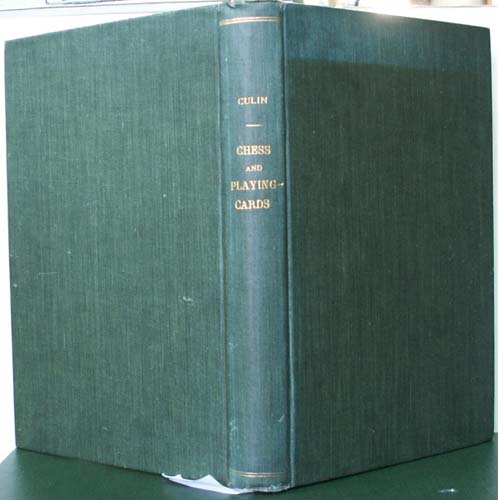
1898년 미국에서 발행된 한국의 놀이문화등을 소개한 희귀책자Chess and Playing-cards
/1898
19세기말 전 세계인들이 즐겨했던 바둑,장기등의 놀이문화를 220여점의 삽화를 곁들여 소개한 책자로 한국의 놀이문화도 비교적 많은 도판을 곁들여 자세하게 소개되어 있음.한국의 윷놀이를 맨처음 페이지에 소개한 것이 이채로움.hard cover, cloth. 8 vo.277pp. 120 illus. in the text plus 50 plates (3 in colour). Modern cloth. Good copy. Catalogue of the games and implements for divination exhibited by the United States National Museum in connection with the Department of Archaeology and Paleotology of the University of Pennylvenia at the Cotton States and International Exposition,Atlanta,Georgia ,1895.by Stewart Culin(Director of the Museum of Archaelogy and Paleontolgy ,University of Pennsylvania....................... ...................KOREA SECTION:(한국놀이문화):Nyout,Tjyong Kyeong-To,Kol-Hpei,SSang-ryouk(backgammon ),Tjyang-kei(chess),Tong-kai(ceremonial quiver),Htou-tiyen(paling-cards)Practice Arrows,Pa-tok(pebble game)
. 초판 |
Stewart Culin(Director of the Museum of Archaelogy and Paleontolgy ,University of Pennsylvania. |
영어 |
Washington, Government Printing Office |
초판 |
2,000,000 원
|
|
|
|
|
|
|
| 4397 |
| |
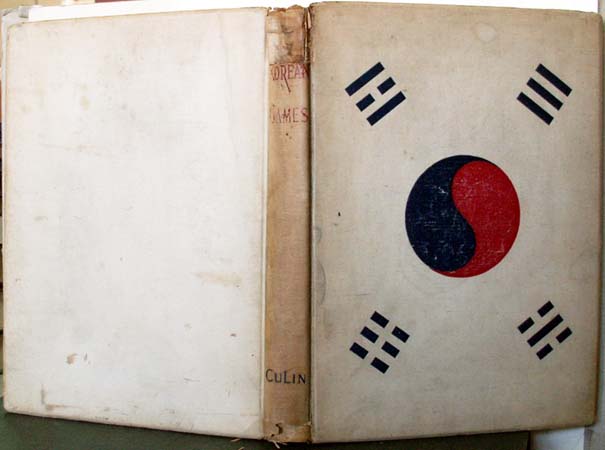
Korean Games(1895년 초판 550부한정판 .22장의 천연색 기산(조선말화가) 그림 포함)앞표지는 태극기로 장식됨.저자 친필 싸인 본.
/1895
Hard cover,cloth sm 4to.(10"x8").xxxvi] + 177p., Index to Korean Names, Index to Chinese Names, Index to Japanese Names, General Index .Korean Games with Notes on Corresponding games in China and Japan, 1st edition, 1st printing, limited to 550 copies, this being #119 of 550 and signed by the author, "Steward Culin". 22 vellum covered colored plates and numerous diagrams throughout. Internally near fine with only fold marks on some vellum cover sheets. Cover is beveled boards with orginal white cloth and bright Korean flag symbol in red and blue, spine lettered with red title and blue author's last name. An amazing book that documents and illustrates 135 games from pre-1900 Korea, China and Japan. A scarce title and a very informative book written and composed by Stewart Culin, director of the Museum of Archaeology and Palaeontology, Univ. of Pennsylvania. Very rare source on Korean Studies. 초판.............................................................................................
Biography STEWART CULIN (1858-1929) excerpted from multiple on line sources.
Born in Philadelphia and raised in Pennsylvania, in 1892 Culin was appointed
Director of the University of Pennsylvania's Museum of Archaeology and
Paleontology. In 1903 he became curator of Ethnology at the Institute of
Arts and Sciences of the Brooklyn Museum in New York City. At various times
he served as a consultant to the United States Bureau of American Ethnology;
was on the Editorial Board of the American Anthropologist, and was a
contributing member of the American Folklore Society.
He had a profound interest in the occult and the mysterious, as evidenced by
his articles on the subjects of voodoo, Chinese secret societies, and sorcery. Culin was a
"diffusionist", and through his studies he attempted to illustrate how and
why similar games appear in different cultures.
Culin's first published report on games in 1889 concerned Chinese games with
dice. During 1891 he worked on an exhibit of games of the world for the Columbian
Exposition in Chicago, and published two papers on games - one about street
games of city boys - and the second about Chinese gambling games. A 1893
report on Chinese games with dice and dominoes was published by the United
States National Museum. Also in 1893 Culin reported on the Columbian
Exposition exhibit of games. Perhaps inspired by his work at the Exposition,
in 1894 he prepared a paper on Mancala games from Africa, which was
published later that year by the U.S. National Museum.
Culin published over 65 papers, articles, and books on a variety of
subjects, ranging from the practice of Chinese medicine in the United
States, to the evolution of fashion as found in works of fine art.
|
Culin, Stewart
|
영어 |
University of Pennsylvania, Philadelpia |
초판 |
0 원
[품절]
|
|
|
|
| 4114 |
| |
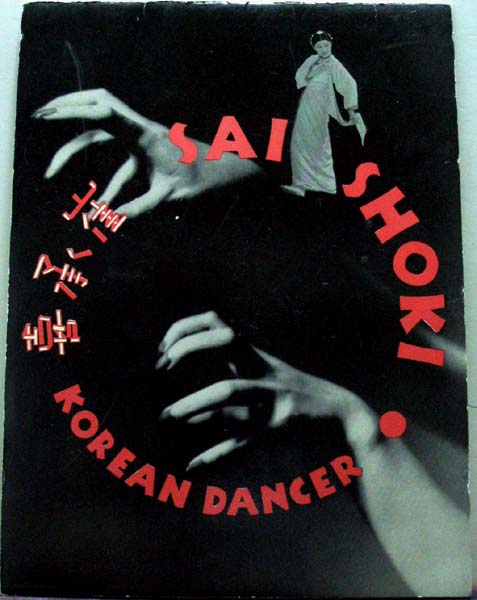
아주 희귀한 1940년 3월 20일 최승희(崔承喜) 가 영문과 한문으로 친필 서명한 최승희 傳記/Program 영문소책자.1939년경 뉴욕발행./1939
앞뒤 표지 포함24쪽.사진 22장 포함.1939년 뉴욕과 1940년의 중남미공연을 위하여 특별히 제작된 것으로 보임.사진상태 최적이며 최승희 개인에 대한 연구와 당시의 무대의상연구등에 좋은 자료가 될것임.
최승희 崔承喜 (1911∼ ?);
무용가. 서울 출생. 1926년 숙명여학교를 졸업하고 일본으로 건너가 현대무용가 이시이 바쿠[石井漠(석정막)]에게 배웠다. 29년 귀국하여 <최승희무용연구소>를 열고 발표회를 가졌다. 31년 카프(조선프롤레타리아 예술동맹)에서 활동하던 안막(安漠)과 결혼한 이후 반일적 내용의 《광상》 《해방을 구하는 사람들》 《고난의 길》 《고향을 그리는 무리》 등과 한국인의 멋을 표현한 《에헤라 노아라》 등의 춤을 안무하였다. 37년부터 세계무대로 진출하여, 38년 파리공연에서 <세계적인 동양의 무희>라는 찬사를 받았고, 39년 뉴욕 공연에서는 <세계 10대 무용가의 한 사람>이라는 평을 받았다. 40년에는 중남미 순회공연을 가졌으며, 46년 월북하여 국립최승희무용연구소를 개설하였다. 한국 전통무용과 서양발레를 접목시킨 새로운 동양 발레를 꿈꾸었던 최승희는 광복 이전 독무(獨舞) 중심 작품활동과 달리 월북 이후에는 군무(群舞) 중심의 무용극 위주로 작품활동을 했다. 50년 《춘향전》 《장고춤》 《검무》 등의 민속무용과 《해방된 조국》 《봄의 노래》 등의 혁명적 신무용 및 《반야월성곡(半夜月成曲)》 《사도성의 이야기》 등 7편의 무용극을 창작하였다. 《사도성의 이야기》는 56년 영화로도 제작되어 그녀가 시도했던 다양한 실험을 볼 수 있다. 한국전쟁 때는 베이징[北京(북경)]에서 《조선민족무용 기본동작》이라는 무보(舞譜)를 만들었고, 55년 인민배우 칭호를 받았으나 주체예술을 수용하지 않는다는 이유로 67년 숙청되었다. (이상 Yahoo.co.kr인용함)...........................................................................soft cover, 8 vo. 24 pages including covers.Illustrated with 22 black and white photographs.Biography wiith an additional essay by Helen Parkhurst, president of the Dalton Schools...............She was born into the upper-class in Keijo (now Seoul) under the Japanese rule. When she was fifteen, she went to Japan to study under a Japanese modern dancer Ishii Baku against her father's opposition. She distinguished herself as one of the most talented dancers. She developed her own modern dances inspired by Korean folk dances, which had been considered as lowly works. She was supported by Japanese intellectuals including Kawabata Yasunari. She went to North Korea and got posts in the communist government. She was purged by the party and disappeared in the 1960s. In February 2003, she was rehabilitated and utilized for propaganda by North Korea, who announced that she died in 1969(From Wikipedia, the free encyclopedia)
. 초판--------------------------------------------------CHOI SEUNGHEE: The Korean Dancer (vhs)
The Extraordinary Life and Career of a Legendary Performer
“She enraptured the world with her grace and enigmatic Asian style.”
The New York Times
“Her dance was full of life, and beautiful; with an unbelievable elegance of movement. She ascended to the greatest heights of her art and profession in her own land, Korea. She introduced Eastern dance to the European world, and performed with Martha Graham and the American Ballet Company. Yet she suffered exile and, almost certainly, assassination at the hands of a bloody tyrant.
“Choi Seunghee was born in 1911 to a poor family in South Korea, then ruled as a feudal colony by Japan. This award-winning documentary traces her amazing and unprecedented rise to international fame and artistic success through her innovative adaptation of traditional Korean dance to modern expressionism. Combining music and dance in sensual combination, her beautiful silhouette and vivacious personality were applauded by both rich and poor throughout Korea, Japan and China, where the dance techniques she developed are still taught.
“Unique color film of Choi Seunghee performing, and many rare archival photographs and interviews give an unforgettable look at the extraordinary life and career of a legendary performer.” ---From the box blurb.
|
Basanta Koomar Roy. |
영어 |
Spotlite Publicity Features,N.Y. |
초판 |
700,000 원
[품절]
|
|
|
|
|
| 3704 |
| |
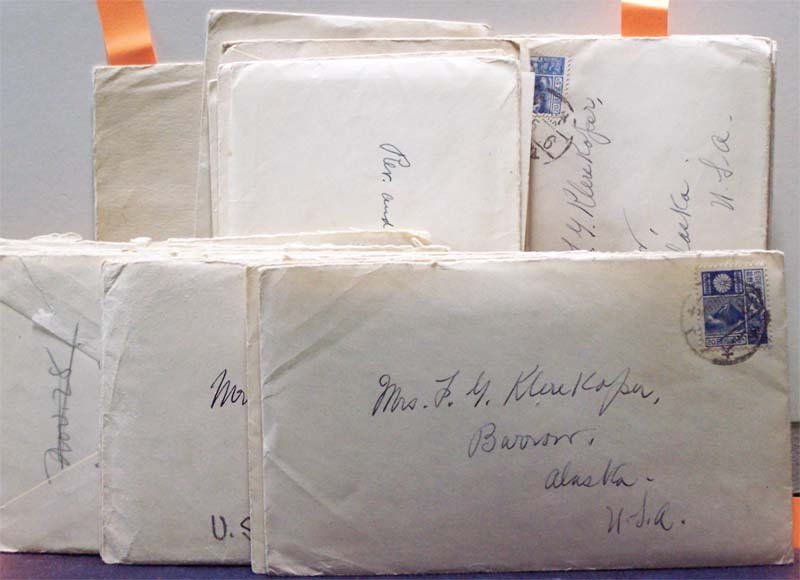
1899-1941 대구-경북지역에서 활동한 선교사의 편지21통. 21 letters and covers from missionary in Korea in 1930'/1941
1889년 부터 1941년 까지 40여년간 대구및 경북지역에서 활동했던 북장로교 소속 Henry Mundo Bruen의 서신 21통으로 편지 1통당 평균 3-4장의 편지지에 타자 혹은 펜으로 쓴 편지로 구성됨.This is a very interesting and lengthy newsy set of 21 covers, all with enclosures, from a Christian missionary in Taiku(Taegu ), Korea, Reverend Henry Munro Bruen, and his wife Dorothy. The letters were all sent to Skagway or Barrow, Alaska, either to Reverend and Mrs. Frederick G. Klerekoper (2), or to Mrs. Klerekoper only (18), or to the Reverend only (1). The earliest cover is dated October from 1935, and the latest date is October 21, 1938. Some letters are typewritten, most are hand written. Several have enclosures, including playbills, a birthday card, news forwarded from Philadelphia and Portugal and Seattle, and there is one with pressed budding flowers..........Contents talk about tent preaching and rather heroic efforts to christianize a very non-christian society, and about the usual homesickness and holidays and politics - Japan at this time. The letters present a very clear picture of the life and anxieties and small successes of the Reverend Bruen and his followers.....Henry Munro Bruen lived in Korea for 40 years from 1899 to 1941 ................................
1935(2 letters)/1936 (9 letters )/ 1937(4 letters) /1938 (6 letters)
......Extremly rare source on the History of Presbyterian Church in Korea
표시언어 English
출판구분 기타. |
Henry Munro Bruen |
영어 |
. |
초판 |
2,000,000 원
[품절]
|
|
|
|
| 3655 |
| |
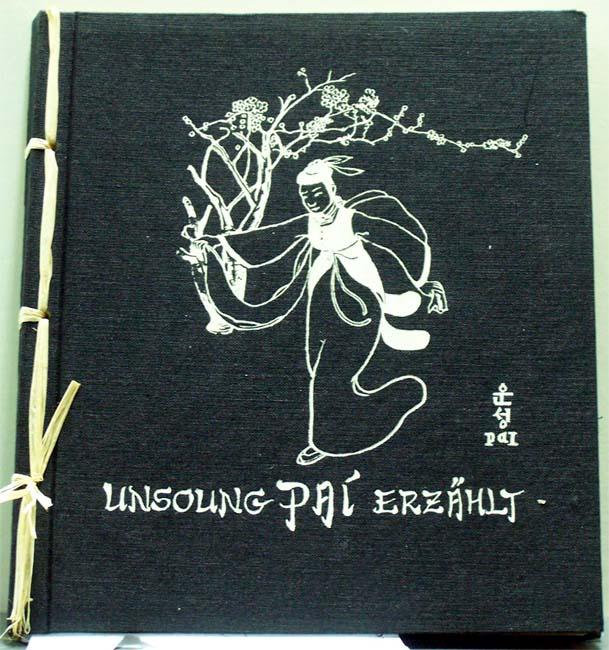
1950년 독일 출판,월북畵家 배운성(1900-?)의 희귀자료. Unsoung PAI Erzahlt aus Seiner Koreanischen Heimat/1950
Hard cover cloth, large 8 vo.108 pages.Illustrated with author's arts.
Author was born in 1900 in Korea and studied political economy at Waseda University in Japan from 1920 to 1922.
In 1922 he went to Germany where he studied contemporay art and
lived there as an active painter to 1940. He returned to Korea in 1940 and devoted himself to the education of art . In 1950 he fled from South Korea to
North Korea................................................................
裵雲成 1901∼? 화가. 서울 출생. 고아로 자라다가 지주 아들의 몸종격으로 1920년 일본유학을 거쳐 22년 독일에 유학했다. 27년 파리의 살롱도톤느전 입선을 시작으로 33년 폴란드 바르샤바국제미전 1등상을 비롯해 각종 국제 미술전에서 잇따라 수상하고 베를린 쿠틀리에 화랑, 파리 샤르팡티에 화랑, 그랑 팔레 등 당시 세계적으로 권위를 지닌 화랑에서 개인전을 갖는 등 30년대 후반 전성시대를 구가했다. 유채를 쓰면서도 주로 목판에 동양의 모필로 부드럽고 유연한 표현효과를 냈고, 한복의 모녀상 또는 한국의 전통적 무악(舞樂) 광경 등을 주제로 하여 유럽에서 각별한 평가를 받았다. 40년 9월 서울로 돌아와 44년 6월 귀국작품전을 가졌다. 정부 수립 직후에 좌익계열의 보도연맹에 가입하였다. 49년 제 1 회 대한민국미술전람회 서양화부 추천작가 및 심사위원으로 참여하였으며, 당시 출품한 작품은 《성호(聖護)》라는 제목의 성화였다. 초대 홍익대학 미술과 학과장과 독일어 교수를 역임하는 등 활발한 활동을 펼치다가 6·25 때 월북했다.(이상 www.yahoo.co.kr의 내용 인용함)..............................................................
Unsoung Pai erzählt aus seiner koreanischen Heimat:
Der blaue und der gelbe Drachen
Ein Kaiser in Korea wünschte sich eines Tages zum Schmuck seines Thronsaales einen ganz besonders schönen Wandschirm. Er ließ den berühmtesten Maler seines Landes zu sich kommen, der weit vor der Stadt in einer Höhle wohnte, beriet sich mit ihm und sagte, der Wandschirm solle die beiden spielenden Drachen - blau und gelb - als Symbol seiner Macht, seines Glückes und des Friedens seiner Regierung zeigen. Der Maler verlangte darauf für den Wandschirm eine ganz bestimmte Seide, die nicht vorhanden war und erst gewebt werden musste.
"Bis ihr diese Seide hergestellt habt, will ich mich in meine Höhle zurückziehen und Studien für den blauen und gelben Drachen machen", sagte er und verließ den Hof.
Nun stellte sich jedoch heraus, dass die Anfertigung dieser Seide weit schwieriger war, als der Kaiser angenommen hatte. Es mussten dazu besondere Seidenraupen ausgesucht werden, und die Maulbeerblätter, mit denen sie gefüttert wurden, mussten gleichfalls besonders ausgelesen sein. Aber auch dann konnten nicht alle Kokons für diese kostbare Seide verwendet werden. Und es dauerte sehr lange, bis man genug Kokons beisammen hatte.
Dann tauchte eine neue Schwierigkeit auf, denn der Seidenfaden war so dünn, dass längst nicht alle Weberinnen damit umzugehen verstanden. Aber schließlich hatte man alles beisammen. Das Stück Seide wurde gewebt und in einen herrlichen Rahmen von Elfenbein gespannt. Nun schickte der Kaiser nach dem Maler und ließ ihm sagen, es wäre alles bereit, er möge kommen und die Drachen malen. Der weigerte sich aber mit der Begründung, er sei noch nicht fertig, und bat um Aufschub.
Der Kaiser, der schon so lange auf die Herstellung der Seide hatte warten müssen, war sehr enttäuscht. Doch er gab nach. Nur jedes Mal, wenn er an dem Wandschirm vorbeikam, der der Bemalung harrte, wurmte es ihn, und seine Geduld nahm von Tag zu Tag ab. Bis er es eines Tages nicht mehr aushielt und wiederum nach dem Maler schickte.
Diesmal sagte der Maler, wenn er jetzt schon komme, könne der Wandschirm nie so gut werden, wie ihn der Kaiser haben wolle. Er müsse noch weiter studieren, und dazu verlangte er weiteren Aufschub.
Schweren Herzens gab der Kaiser nach, aber seine Geduld war diesmal nur sehr kurz, und bald schickte er zum drittenmal zu dem Maler mit der Weisung, ihn auf jeden Fall mitzubringen. Der Maler ging willig mit. Er sagte dem Kaiser, gerade hoffe er soweit zu sein, um die Drachen malen zu können. Dann ließ er sich Farbe bringen, gelbe und blaue, dazu einen riesigen Pinsel, trat vor den wunderbaren Wandschirm, dessen Seide kostbar in dem Elfenbeinrahmen schimmerte, zog erst quer über die Seide einen dicken blauen Strich, dann einen dicken gelben Strich, legte den Pinsel nieder und sagte, er sei fertig.
Der Kaiser, der etwas ganz anderes erwartet hatte, war entsetzt und sagte, das sei doch nicht sein Ernst, diese Striche, so dick wie Balken. Aber der Maler behauptete, dies sei das Ergebnis seiner Studien, und wollte weggehen. Da ergrimmte der Kaiser sehr, beklagte den Verlust der kostbaren Seide, die soviel Mühe erfordert hatte, nur damit ein Maler sie in einer Minute mit zwei kunstlosen Strichen verderbe. Er ließ den Mann ins Gefängnis werfen, denn er dachte, der Maler habe sich mit ihm einen Scherz erlaubt.
Doch nachts, als der Kaiser vor Ärger kaum schlafen konnte, traten vor seine Augen die beiden Striche. Und mit einem Mal begannen sie, sich vor ihm zu bewegen und waren durch aus keine Balken mehr, wie es ihm geschienen hatte, sondern waren geschmeidig wie der blaue und der gelbe Drache und flink und stark und beängstigend in ihrer Kraft. Das Erstaunlichste aber schien, dass diese Eigenschaften nicht nacheinander sichtbar wurden, sondern zu gleicher Zeit. Und all das war in die beiden Striche gebannt, die der Maler über die Seide gezogen hatte.
Das fuhr der Kaiser aus dem Schlaf empor, befahl sein Reitpferd und ritt, von seiner Wache begleitet, in Nacht und Nebel zu der Höhle des Malers. Der Sturm heulte in den Bäumen, und nur mit Mühe und Not konnten sie den Weg finden. Mit Fackeln traten sie in das Dunkel der Höhle, und das erste, was der Kaiser erblickte, waren auf einer Wand zwei Drachen - blau und gelb -, die miteinander spielten. Daneben stand der Tag verzeichnet, an dem der Kaiser dem Maler den Auftrag gegeben hatte. Und dann folgten Wand für Wand immer neue Drachenbilder, von denen jedes einen anderen Ausdruck hatte, aber jedes wurde zugleich auch einfacher. Am Schluß einer langen Reihe sah der Kaiser die beiden Striche, die der Maler auf seinen Wandschirm gemalt hatte. Daneben stand der Tag verzeichnet, an dem er den Maler hatte holen lassen. In diesen beiden letzten Figuren, die auf den ersten Blick aussahen wie Striche, waren doch alle Drachen vereinigt, welche die übrigen Wände bedeckten. Und obwohl sie nicht so natürlich waren wie die ersten, lebten sie doch stärker als alle anderen zusammen.
Da wurde der Kaiser sehr zufrieden, ja fröhlich, und befahl sofort die Rückkehr. Alles ging ihm zu langsam, denn er konnte den Augenblick nicht erwarten, da er vor des Malers Antlitz treten würde, um ihn um Verzeihung zu bitten und zu danken für das, was er ihm mit den Sinnbildern des blauen und gelben Drachens geschenkt hatte.
(aus: Unsoung Pai erzählt aus seiner koreanischen Heimat, Kulturbuch-Verlag Darmstadt, 1950). (이상 www.koreaheute.de의 내용을 인용함)
표시언어 German
초판.
|
Unsoung Pai(1900-?) |
독어 |
Kulturbuch-Verlag Darmstadt,Germany |
초판 |
300,000 원
|
|
|
[1]2 3 |
|
|